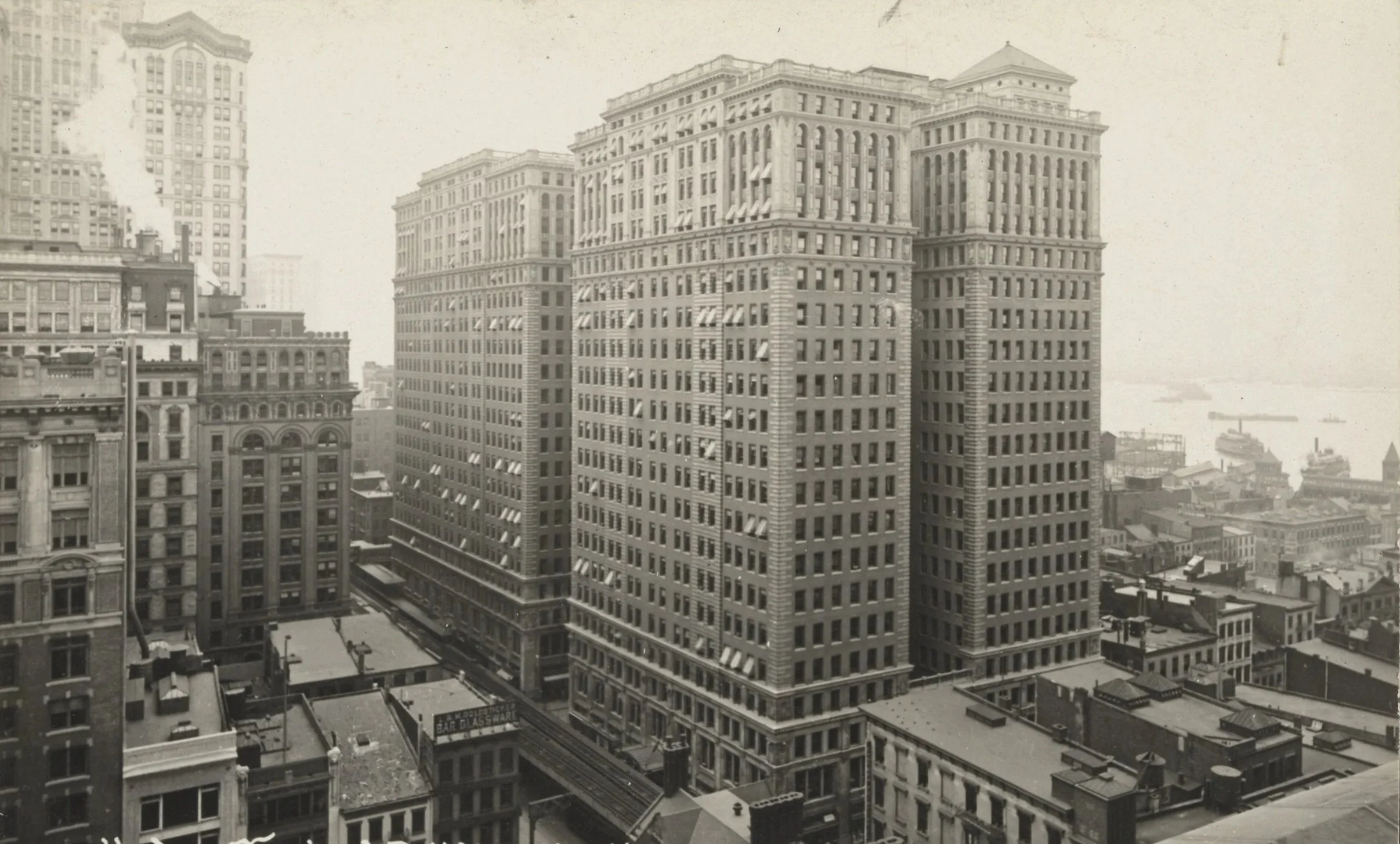
“Indeed...it is a fact nevertheless that there’s nothing that has kept up with the procession any better in the march of modern progress than the now everywhere familiar awning; once a luxury, now a necessity, and never so perfect and beautiful as now in the day of its widespread, common use.”
— House Beautiful, 1901
On Aesthetics
“In fact, you take a great flat or apartment house with many windows and adorn it with handsome awnings, and you have in effect a great flower garden.”
— House Beautiful, 1901
“I can’t understand your viewpoint when those dirty awnings are a perfect eyesore with regard to that south portico. I have had them painted; I have had them washed and they have been renewed every year and still they look like hell when they are on the porch.”
— President Harry S. Truman, 1947
“Awnings - investment in comfort or mere show? If your house needs additional weather control, awnings will often do the trick. And, if you use them wisely, they’ll be a handsome addition to your house. But they can become downright vulgar if poorly chosen or poorly placed.”
— House Beautiful, 1949
“Neo‐Classic relentlessness of those cast‐iron office buildings was relieved by a veritable sea of bright canvas.”
— The New York Times, 1978
“Awnings were formerly commonplace over the windows on all floors of so many of New York City’s buildings. A photograph of the original Delmonico’s exhibits such awnings. Today, such appearances are rare. Why? Were they fire hazards? Were they made obsolete as a result of air-conditioning?”
— Q&A, The New York Times, 1997
“Summers come and go, and the city’s apartment houses do without their old, cheerful status symbol — the window awning.”
— The New York Times, 1960
On the Disappearance
“To the Editor: About ‘The Disappearance of Awnings’ [Awnings] started to disappear in the early 1940’s, long before air-conditioning. Maybe it was because of rent control. Landlords started to cut back on amenities when buildings became less profitable.”
— The New York Times, 1997
“It was a labor-intensive thing to put them up and take them down every year so when World War II came along and there weren’t a lot of men around who could help do it, they just started to fade away.”
— The New York Times, 1997
“If you want to do away completely with the winter storage, and the take-’em-down, put-’em-up again problem, study the design of this folding aluminum awning.”
— House Beautiful, 1949
“Since duck and canvas are in critical military demand, it is not likely that many people will have new awnings this year.”
— The New York Times, 1945
“Sometimes it can be a bit of a jolt to see the most familiar Modernist houses, which we tend to think of in rigorous black and white, in colour photos, draped with garish awnings and striped canvases. Yet, perhaps because awnings look to us a little more high-street butcher’s than high-Modernist glam, they seem to have been insidiously filtered out of the histories of modern architecture — despite, in their own way, being the most modern thing imaginable: lightweight, mechanical, flexible, responsive, adaptable.”
— The Financial Times, 2023
“The need for awnings must have become obvious as soon as glass became cheap enough to allow for large areas of glazing. The Georgians quickly discovered that once a building envelope incorporates sizable areas of glass, overheating becomes a greater concern than cooling, even in the winter and in a cold climate such as the UK.”
— Robyn Pender, Historic England, 2021
“Awnings were fixtures of the seasons, an urban counterpart to the hum of cicadas on a summer night.”