
As global temperatures rise, keeping buildings cool has become one of the fastest-growing energy challenges of the twenty-first century. While air conditioning has dramatically improved comfort, it also increases electricity demand and therefore, in most places, results in increases in carbon emissions from burning fossil fuels.
Climate Context

Why Buildings Matter
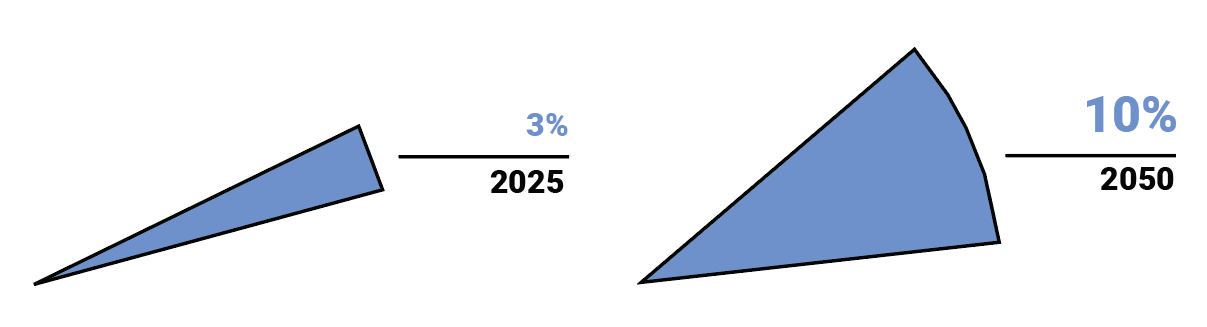
Operating buildings (heating, cooling, and electricity) accounts for roughly 27% of annual global carbon emissions today (Architecture 2030). Cooling alone represents approximately 3% of those emissions (Ritchie 2024), generated by approximately 2 billion air-conditioning units worldwide.
Due to rising temperatures, global demand for cooling is expected to more than triple by 2050.
If current trends continue, the United Nations projects that greenhouse gas emissions from cooling will grow from approximately 3% of global annual emissions today to 10% by 2050.
A dangerous feedback loop has been identified.
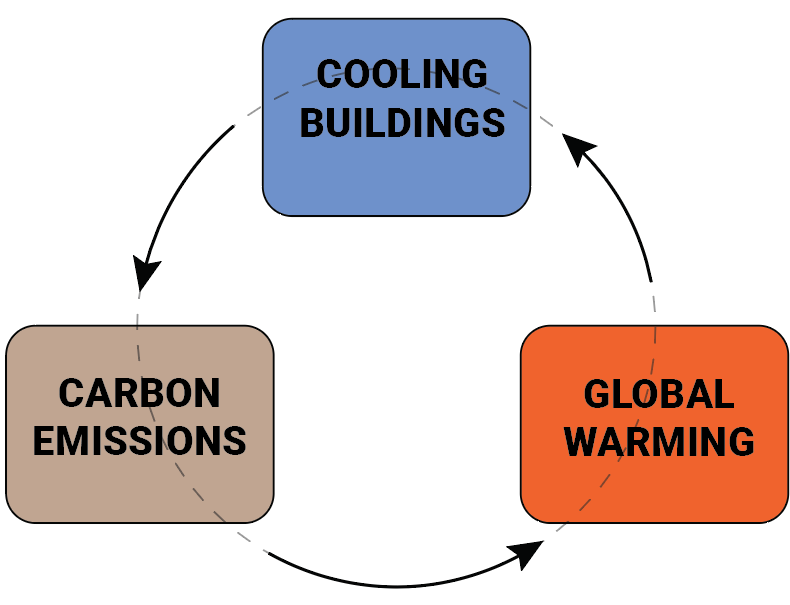
Higher temperatures drive more cooling, producing more carbon emissions, and leading to even higher temperatures. This has now been termed:
Cooling Doom Loop
Cooling Doom Loop
Next Step