
Evaluate Your Building
Is Your Building a Good Candidate for Awnings?
Window awnings are a simple, low-tech solution rooted in common sense. Evaluating your building doesn't require specialized knowledge, just a few basic observations about your windows, sun exposure, and existing shade. Not every building will benefit equally from window awnings. Use the questions below to determine whether awnings may be an effective option.
Which Direction Do Your Windows Face?
The direction your windows face has the greatest influence on how much direct sunlight they receive throughout the day and whether awnings may provide significant results. Buildings with the greatest number of unshaded windows generally have the greatest opportunity for improvement. Corner buildings with southern and western exposures are particularly good candidates for window awnings.

South-Facing
Receives high sun exposure for much of the day, especially during summer.
West-Facing
Receives intense afternoon sun during the hottest hours of the day.

East-Facing
Receives morning sun and may benefit from shading depending on occupancy and climate.

North-Facing
Receives little direct summer sunlight. See Cartier Building example below.
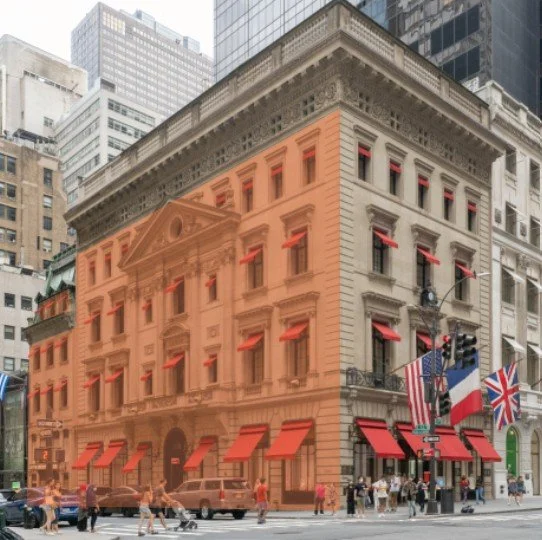
The Cartier Building at 653 Fifth Avenue demonstrates that awnings can serve different purposes depending on orientation. The north-facing facade (highlighted in red) receives virtually no direct solar radiation, so the awnings function primarily as architectural decoration and branding elements rather than as passive cooling devices. In contrast, the west-facing awnings shade windows exposed to the afternoon sun, where they help reduce solar heat gain in addition to serving their street marketing purpose.
Orientation Matters
Photo: ajay_suresh, CC by 2.0, Wikimedia Commons
Because solar exposure varies by orientation, awnings are installed only where they provide meaningful shade. This example shows appropriate placement on a corner building with north- and west-facing facades. Awnings are not installed facing north.
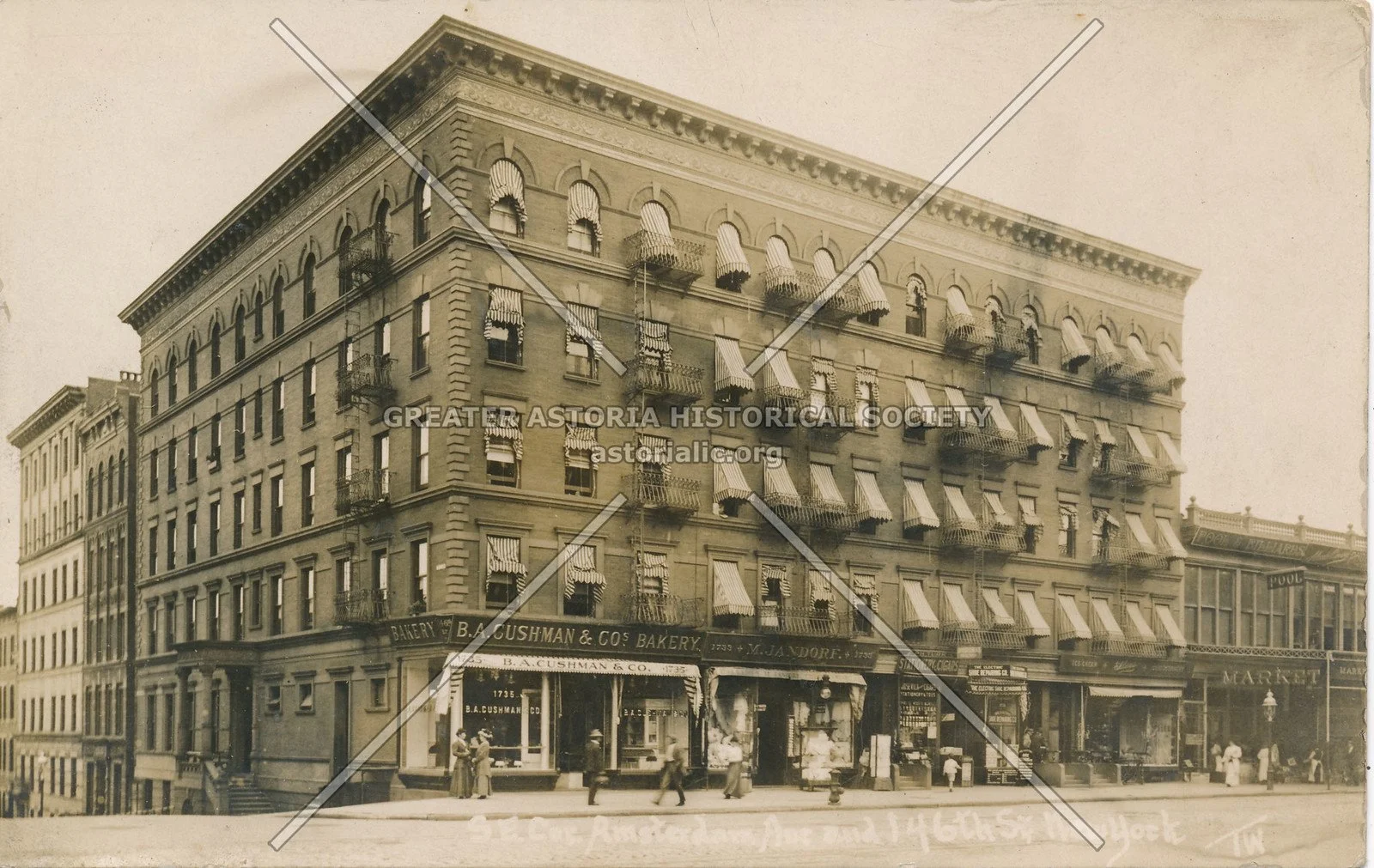
Awnings are not installed on north-facing windows. Correct! Photo: Greater Astoria Historical Society
Are Your Windows Already Protected from the Sun?
Natural or existing shade from site conditions may already shade windows and reduce solar heat gain. Examples include:
Mature trees
Adjacent buildings
Deep roof overhangs
Balconies
In addition to observing your building throughout the day, digital tools such as Shadowmap and Google Earth Pro can help visualize sun paths and seasonal shading. In mixed climates like New York City, evaluate sun exposure during the summer months, when window awnings provide the greatest cooling benefits.
Passive Shade from Buildings Ancient Roman architects understood that narrower streets stayed noticeably cooler in the late afternoon because they limited exposure to direct sunlight through cast shadows.
Passive Shade from Trees Today, New York City is actively working to expand tree canopy cover to provide greater cooling, improve air quality, and help absorb stormwater. Read more here.
Window awnings benefit both mechanically air-conditioned and naturally ventilated buildings by reducing the amount of solar heat that enters through windows.
For buildings with air conditioning, awnings reduce cooling demand, helping HVAC systems work less. This lowers energy use, reduces operating costs, and decreases associated carbon emissions.
For buildings without air conditioning, awnings help keep indoor spaces cooler, improving thermal comfort through passive cooling.
Do You Use Air Conditioning?
Awnings to Prevent Overheating Many buildings in the United Kingdom rely on natural ventilation rather than mechanical cooling and are increasingly experiencing summer overheating as the climate warms. Responding to this growing need, Stay Shaded UK introduced the first removable DIY awning designed for traditional sash windows in 2026. The initial release sold out almost immediately!
What Type of Building Do You Have?
Window awnings can be appropriate for many building types, including:
Individual or multi-family rowhouses
Pre-war multi-family residential buildings
Mid-rise and high-rise residential and commercial buildings
Institutional buildings including libraries, hospitals, educational
Explore the Photo Archive to see how window awnings were historically used across a wide range of New York City building typologies before the widespread adoption of mechanical cooling.
Next Step
Design Effective Window Awnings